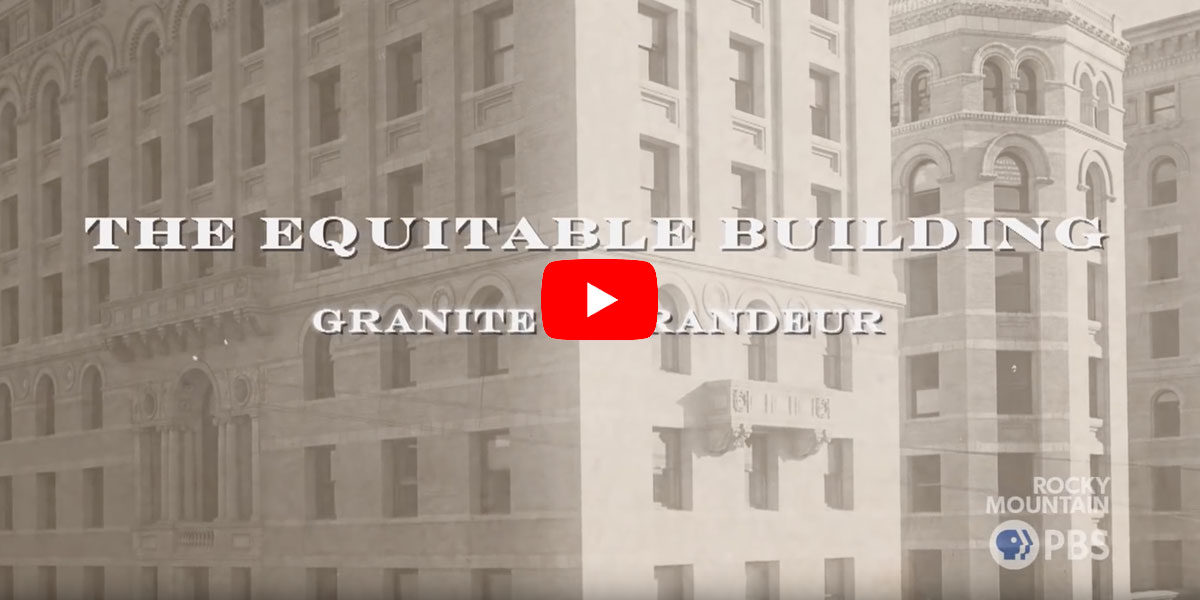
Equitable Building

News

Denver Post: 133-year-old Equitable Building gets update to meet energy-efficiency goals

Equitable Building
Pipe welder Damian Junius works on new boiler pipes at the Equitable Building in Denver., on Sept. 18, 2025. The upgrades aim to reduce energy costs and comply with the city’s mandate for more efficient buildings while preserving the structure’s historic character. The building’s steam-heat system will be replaced with natural gas. (Photo by RJ Sangosti/The Denver Post)

Landmark structure balances up-to-date energy standards with preserving historic architecture

By JUDITH KOHLER | jkohler@denverpost.com | The Denver Post

Equitable Building
The Equitable Building undergoes upgrades in Denver., on Sept. 18, 2025. The work aims to reduce energy costs and meet the city’s mandate for more efficient buildings while preserving the structure’s historic character. The building’s steam-heat system will be replaced with natural gas. (Photo by RJ Sangosti/The Denver Post)

The city of Denver has set goals for buildings to become more energy-efficient and less polluting. Built in the late 19th century, the landmark Equitable Building is undergoing a behind-the-scenes transformation to meet those goals in the 21st century.

The building, on the National Register of Historic Places, is switching from the downtown steam-heat loop, which has warmed the nine-story structure since its opening in 1892, to a new natural gas system. Most of the work being done to make the 133-year-old building more energy-efficient is taking place inside, behind the exterior that features Colorado granite blocks and bricks, terra cotta ornamentation and a Palladian-style window, which has three separate sections.

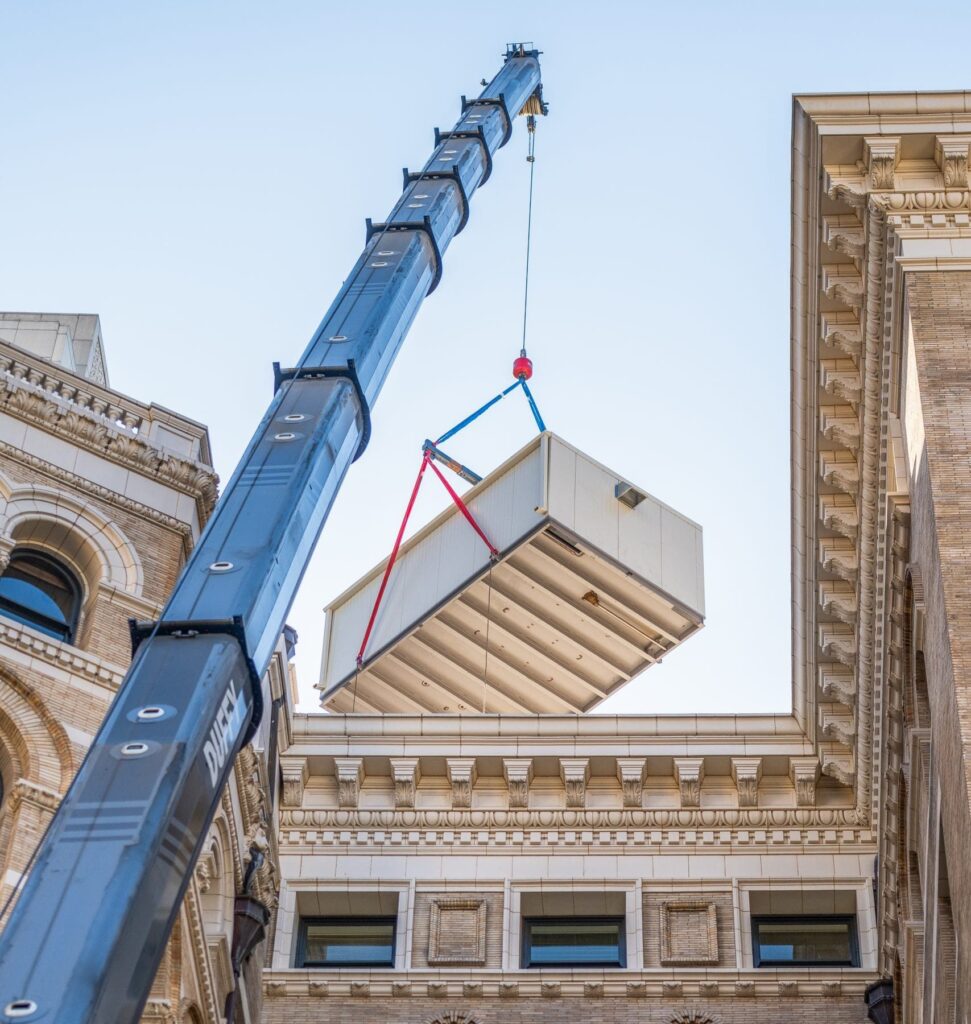
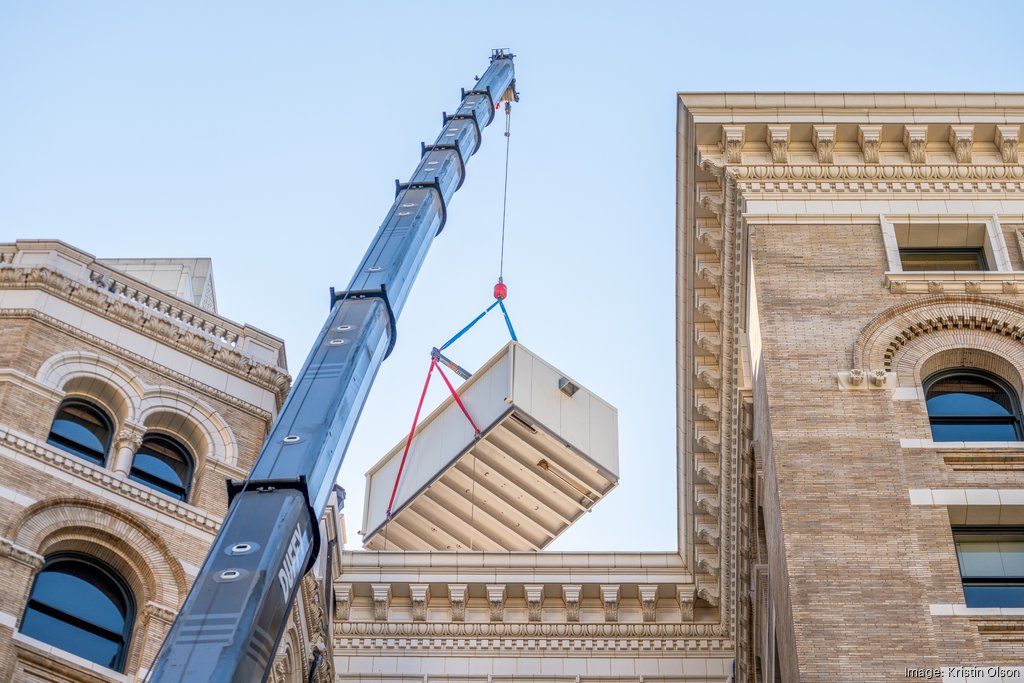
But a big part of the update, a 22,000-pound boiler plant, is on the roof. There wasn’t enough room inside to install the plant and comply with city codes. The property manager, Elevate Real Estate Services Inc., worked with Braconier, a Colorado-based mechanical engineering firm, to come up with the solution.

Traffic was blocked off around the building at 730 17th St. on Sept. 27 as a crane lifted a rectangular box to the roof. The boiler plant is about 23 feet long, 12 feet wide and 12 feet high. The crews lowered it onto a platform that used to hold heating and air conditioning equipment.

Equitable Building
Downtown Denver’s Equitable Building, on the National Register of Historic Places, is updating its heating system to meet city goals for energy efficiency. The work includes switching from steam heat to natural gas, which required placing a boiler plant on the building’s roof. (Photo Courtesy of Kristin Olson)

“From the historical compliance standpoint, we went through a whole approval process with Historic Denver, making sure this wasn’t going to be overly visible from the street level,” said Andrew Glaser, vice president of operations with Elevate.

Historic Denver, a nonprofit advocacy organization, has an easement on the Equitable Building’s facade.

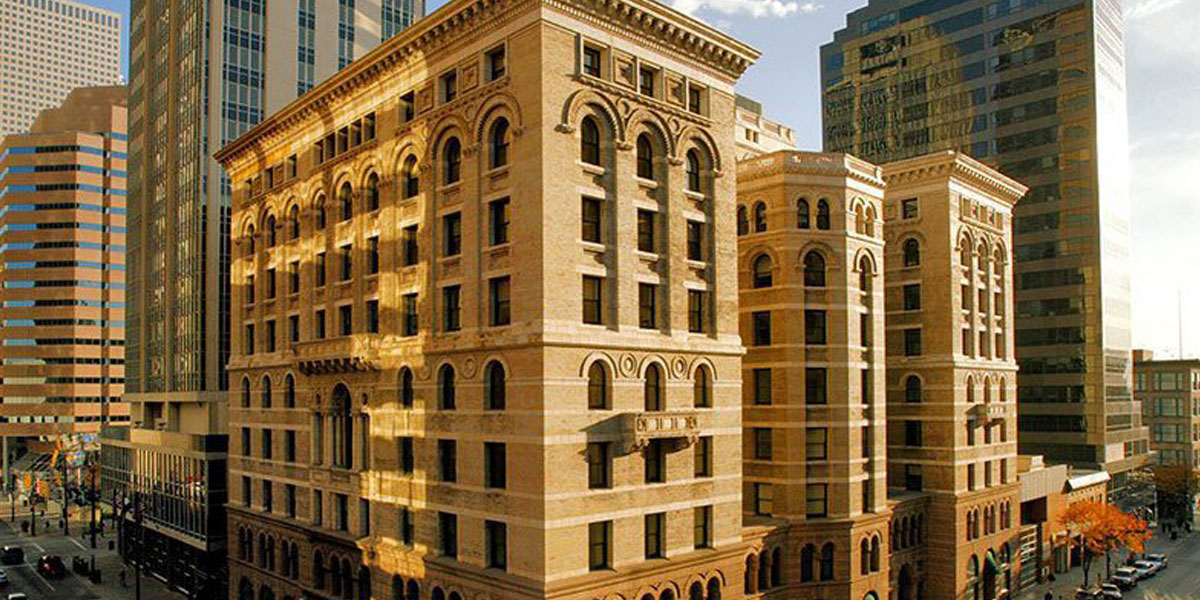
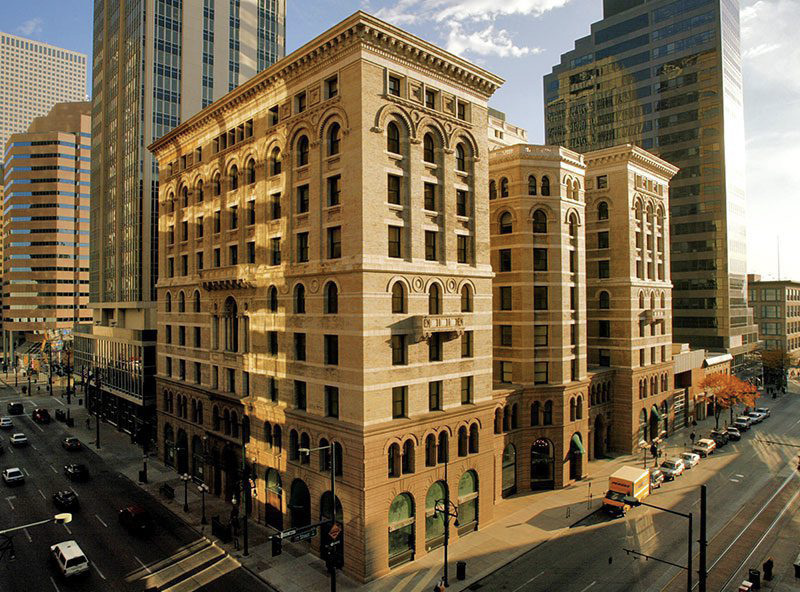
The Equitable Life Assurance Company built what became an anchor of Denver’s growing financial district on 17th Street, dubbed the “Wall Street of the West.” The building’s architecture is Italian Renaissance Revival. The floor plan is in the shape of two back-to-back E’s.

The opulent interior has hundreds of thousands of mosaic tiles on the vaulted ceilings on the first floor; marble pillars, walls and floors; chandeliers; a bronze staircase; and a Tiffany stained glass window.

Elevate is overseeing $5.5 million in work on the building, including about $2.5 million to convert to gas heat. Other upgrades are modernizing the elevators, improving the fire alarm system and restoring parts of the facade.

Equitable Building
Gary Reed’s “Equitable Building Staircase” focuses on the interior details of one of Denver’s oldest structures. (Provided by the Denver Architecture Foundation)

The new heating system will not only help the Equitable Building to comply with city energy-efficiency policies, it should dramatically slash the building’s energy bill. The building, whose offices are owned by individual users, is paying about $200,000 a year for heat, or more than half of the annual utility costs.

Glaser said the energy costs are expected to drop by about 40% with the new system.

The steam loop, which heats most large buildings in Denver’s downtown core, is more than 100 years old and inefficient, said Emily Gedeon, spokeswoman for the city’s Office of Climate Action, Sustainability and Resiliency. She said rates have doubled in the past decade.

The city completed a feasibility study on a shared, carbon-free heating and cooling system for downtown and received a $4.9 million grant for a pilot project.

Glaser said Elevate, which manages the property as the commercial equivalent of a homeowners association, explored different alternatives for heating the building: heat pumps, electricity and natural gas. Heat pumps, which can cool and heat, would have required modifications in every unit in the building. The current cooling system is only halfway through its life span, Glaser said.

And converting to electricity would have cost double the amount of gas to operate, according to Elevate.

Balancing history with new standards

With the conversion to natural gas, Elevate can use the existing distribution system to deliver heat throughout the building. New pipes and pumps are being constructed in a room just below the roof. Equipment in the basement that draws in the steam and pumps it to the distribution network will be demolished once everything is up and running.

When it became clear that a gas boiler plant wouldn’t fit in the basement, Braconier helped Elevate engineer “this one-of-a-kind solution,” Glaser said.

Equitable Building
A platform is prepared to hold a 22,000-pound boiler plant that will be hoisted onto the roof of the Equitable Building. The platform is photographed on top of the building roof in Denver., on Sept. 18, 2025. The upgrades aim to reduce energy costs and comply with the city’s mandate for more efficient buildings while preserving the structure’s historic character. The building’s steam-heat system will be replaced with natural gas. (Photo by RJ Sangosti/The Denver Post)

Braconier, founded in 1906, previously worked on changing the nearby Johns Manville Plaza from steam heat. The company had the Equitable Building boiler plant prefabricated offsite and used LiDAR — light detection and ranging technology — to create 3-D images to craft a computer model of the building. Following the models, the company could put together much of the pipelines offsite, knowing the structures would fit the space.

“Everything comes in, and it’s just snapped together like a Lego set,” said Sean Jackman, special projects manager for Braconier.

Glaser said the 175,000-square-foot building has surpassed the city’s energy efficiency target — energy used per square foot — for 2028. Equitable’s rating is 57.1, and the 2032 target is 48.3.

“We’re very confident that between the gas conversion and the other ancillary things, we’re be able to achieve that,” Glaser said.

The building’s rating on the federal-backed Energy Star program that measures energy performance is 83 on a scale where 100 is the best, Glaser said. The granite foundation and perimeter wall provide “great insulating value,” he said.

“The Equitable Building has weathered a lot of storms the last 133 years: the silver downturn, the oil downturn,” Glaser said. “We think these projects are proof that landmark buildings like the Equitable can adapt and still thrive in the market.”

[View source: here]
Denver Business Journal: 130-year-old downtown Denver building is making moves to modernize

Denver Business Journal: 130-year-old downtown Denver building is making moves to modernize
The Equitable building had to get creative to make needed improvements.

By Catie Cheshire – Reporter, Denver Business Journal

The Equitable building in downtown Denver has been around since 1892 and the property managers of the historic building are on the quest to prove age is just a number.

Elevate Real Estate Services has managed the Equitable for the last eight years and plans to invest $5.5 million in the building to modernize the infrastructure while maintaining the historic character to bring The Equitable along on downtown Denver’s revitalization journey.

“The market downtown is hardly at its peak,” said Andrew Glaser, vice president of operations and partner at Elevate. “The Equitable has weathered a lot of storms over the last century and a quarter, from the silver boom to the oil crash, Ultimately, these renovations will help bring back a super high operating level at probably one of the most, if not the most, unique office building in downtown right now as downtown claws its way back up to being a more relevant market again.”

The first project at The Equitable is already complete: in September, the building switched from being part of Denver’s steam heating system to a natural gas heating method. According to Elevate, steam heating accounted for over 50% of the 730 17th St. building’s annual utility cost. Glaser said Steam costs for the building owners and tenants had increased drastically in the last decade in part because, as the building lost tenants due to the pandemic and other market factors, everyone had to chip in more.

“That was one of the main drivers and then just from an energy efficiency standpoint, or sustainability standpoint, the steam is coal-fired, so it’s not the most environmentally friendly,” Glaser said. “While a lot of people might say that natural gas is not as friendly as electric, it’s certainly more friendly than coal-fired. We feel like we’re finding a happy medium as most projects in historic preservation often do.”

The Equitable was designated as a Denver historic landmark in 1977 and added to the National Register of Historic Places the next year.

The building’s historic status meant the conversion to natural gas was a challenge. According to Glaser, the original idea was to put a boiler in the basement where the steam mechanical infrastructure currently exists. However, Denver code requires boilers to be in their own enclosed rooms, which wasn’t possible in The Equitable.

Additionally, running a gas flue vent along the side of the building would disrupt the exterior facade, on which Historic Denver has an easement preventing certain alterations.

Glaser credits local engineering firm Braconier with the solution of entirely fabricating a boiler off-site, then placing that boiler on the roof using a crane.Rather than an exterior exhaust pipe, the pipe runs through the middle of the building. That method also allowed The Equitable to preserve the steam system to allow a few weeks of testing during the winter for the new gas system before dismantling the steam infrastructure.

Elevate liked the security of being able to know the new solution works before making a non-reversible change, Glaser said.

Historic Denver approved, too, and the 22,000-pound boiler now sits on the roof waiting for chilly days to begin. Next, Elevate will modernize the elevators, restore the facade and replace the fire alarm system.

Throughout the renovations, the Tiffany Glass and Italian marble and French Onyx lobby finishes will be maintained, as will other historic design elements.For example, the elevator has an illuminated light above each door, signaling whether the elevator is going up or down, which is a representation of theArt Deco style. During the elevator upgrades, Elevate plans to preserve the exterior style of the feature but install LED lighting behind it for better energy efficiency.

Glaser says finding innovative solutions for the historic property is rewarding because it shows landmark assets can stay relevant and thrive.

“In three months, we’re going to be done with both the steam to gas and the fire alarm project and we’ll literally have a state-of-the-art, high-efficiency boiler system and a state-of-the-art fire alarm control panel and fire alarm system, but you would never know,” Glaser said. “It’s just really nice to be able to provide the high-end infrastructure of a modern building and the history of the historic asset.”

Adaptive reuse and conversions of old buildings are a focus for downtown Denver right now, with the Denver Downtown Development Authority pledging $31.7 million toward two office-to-residential conversions of historic buildings in the area and other private developers investing in plans to retrofit older properties to give them new life.

Though the Equitable building remains an office, the upgrades are an example of how properties can maintain both their character and relevance.

Glaser said his top tips for others looking to revamp historic properties are to be deeply curious about the building, to leave no stone unturned on the quest for a solution, to be detail-oriented and to have excellent partners.

“It takes a lot of coordination with your vendor and getting them on board early on in the project to working a little bit harder than usual,” Glaser said. “Wearen’t just buying new for everything. Everything seems to be a halfway negotiation between modernization and preserving historic elements, so the partners go a really long way with that.”

In 2000, The Equitable converted to a condo system where individual owners purchase separate suites, charging Elevate with making building-wide investments for the collective. Along with The Equitable, Elevate manages around 55 buildings across metro Denver.

[View source: here]

Mile High CRE: Denver’s Equitable Office Building is Energizing a New Future

Mile High CRE: Denver’s Equitable Office Building is Energizing a New Future
Photo credit: Kristin Olson

Constructed in 1892 as the most modern office building west of the Mississippi, downtown Denver’s Equitable office building, located at 730 17th Street, is once again providing the framework for office buildings to modernize via engineering ingenuity and lower operating costs. Like many other downtown office buildings, the Equitable—which is owned by individual office users and managed by Elevate Real Estate Services, Inc.—was confronted with escalating energy costs, along with city pressure to convert to electricity as an energy source, and needed to make a change.

For the past 133 years, the building has been using steam heating, with rates that have become more than 50 percent of the building’s annual utility cost, something that is unsustainable. The Equitable needed to find a way to convert off the city steam loop. Elevate began to look for modern options that would meet building code requirements, lower operating costs and maintain the historic elegance and significance of The Equitable.

Working with Braconier, a Colorado-based design-build mechanical engineering firm founded in 1906, the team turned its attention to natural gas as the solution. Not only will it reduce energy costs by 40 percent, but it was also found to provide more favorable economics with the lowest cost of installation and lowest operating cost.

The historic landmark status of The Equitable demanded that the team find an innovative solution for placing the 22,000-pound boiler plant. They knew there wouldn’t be enough space inside the building for a boiler plant to meet modern code compliance. Braconier came up with an innovative solution to prefab the boiler plant and crane it onto the building’s roof. The plan was ultimately approved by Historic Denver to ensure the historic facade easement they hold isn’t impacted.

“The Equitable building has a long history of ingenuity and looking towards the future, ever since it introduced the first-ever elevators in an office building anywhere west of the Mississippi,” said Dan Meitus, president and CEO of Elevate. “The team navigated the external pressures to electrify and the internal complications of working on a historic landmark, and ended up with a totally one-of-a-kind engineered solution that meets all the requirements. We’ll be more energy efficient while keeping the historical facade and maintaining the registered historic landmark status of the building. The Equitable is once again at the forefront of positive change and helping to revitalize the downtown office market.”

Elevate is managing this important conversion along with additional capital projects at The Equitable. The improvements include elevator modernization, facade restoration and fire alarm system replacement, a total of $5.5 million in infrastructure renovations. The Tiffany Glass, installed in 1896, and the grandeur of the Italian marble and French Onyx-laden lobby interior will also be maintained and as beautiful as ever. All the work falls in line with the city’s push to renovate and re-energize downtown.

More information about the Equitable Building and its rich downtown Denver history is available at www.equitabledenver.com.

[View source: here]

Terra Cotta to Tax Credits: Restoring The Equitable

Terra Cotta to Tax Credits: Restoring The Equitable

Colorado Real Estate Journal

The first elevators west of the Mississippi. The pink Pikes Peak granite glinting in the Colorado sun. At the corner of 17th and Stout streets stands a building that has quietly shaped Denver for more than 130 years. Clad in locally quarried granite, with floors and walls of French onyx and Italian marble, the Equitable Building was once the tallest structure between Chicago and San Francisco. This spring, we helped complete a decade-long, five-phase façade restoration that preserved its architectural beauty and reinforced its relevance in Denver’s evolving commercial real estate market.

This project wasn’t just about scaffolding and repairs – it was about honoring a building that has stood at the heart of the city’s financial and political history.

From “Wall Street of the West” to CRE landmark. Designed by Boston architects Andrews, Jacques & Rantoul in the Italianate Renaissance Revival style, the Equitable features pink granite on its lower stories, terra cotta banding separating upper floors into wedding cake layers, and a façade meticulously adorned with arched windows, ornate cornices, cherubs and cantilevered balconies.

When it opened in 1892, the Equitable stood as a symbol of Denver’s rapid growth. Constructed with cutting-edge fireproofing technologies – porous terra cotta tiles from the Denver Terra Cotta Co., proven superior to dense brick in 1890 testing – the nine-story marvel boasted hydraulic elevators, steam heat and rents starting at $15 a month. It helped anchor what would become “The Wall Street of the West.”

During 1893-94, while the state Capitol was under construction, the Equitable served as the seat of Colorado’s executive offices, becoming a hub for decision-making and influence.

Over the decades, the Equitable remained a performing asset through the silver crash, Great Depression and oil booms. In the early 1980s, it enjoyed 100% occupancy at $30 per square foot. In 2000, St. Charles Town Co. converted it into office condominiums, giving multiple owners a stake in stewarding the historic building. A 2009 reserve study led the association to begin phased façade maintenance – cleaning, re-pointing, and restoring masonry and trim – which laid the groundwork for the major restoration that began in 2019.

The Stout Street façade restoration. Our firm managed the five-phase restoration, starting with the alley and progressing clockwise around the building to the highly visible Stout Street side. The project included stabilizing deteriorated structural steel, restoring decorative terra cotta and navigating stringent city permitting requirements.

We partnered with Building Restoration Specialties, a RiNo-based firm specializing in historic masonry restoration, preservation and conservation of historical buildings, and Martin & Martin, which provided structural engineering expertise. One of the biggest challenges was restoring the cantilevered balconies, whose original steel beams – produced by Carnegie Steel Co. – had severely corroded due to prolonged water infiltration.

To preserve the balconies’ ornate architectural details, BRS removed original terra cotta slabs, then handcrafted molds for each unique piece. These were recast in a custom plaster mix engineered to match the original terra cotta. This blend of art and science – modern stabilization techniques paired with traditional craftsmanship – is what brought the building’s grand façade back to life.

Our team coordinated construction logistics, budgets, and tenant communications. We navigated expensive sidewalk occupancy permits, complex scaffolding setups, and tight staging zones while maintaining operations and minimizing tenant disruption.

The Equitable’s façade is meticulously adorned with arched windows, ornate cornices, cherubs and cantilevered balconies.

Preservation is good business. The Equitable restoration was more than an architectural achievement – it was a strategic investment. Studies from PlaceEconomics and the National Trust for Historic Preservation show that historic commercial buildings outperform their newer counterparts in value appreciation and occupancy. Over the past five years, restored assets in walkable downtowns have seen 13% higher property values on average.

Projects like the Montgomery Building in South Carolina and San Francisco’s Jackson Square demonstrate the same trend: Preservation attracts high-quality tenants seeking authenticity and character – a growing demand in a market increasingly dominated by sameness. While downtown Denver’s recovery is still underway, the Equitable is well positioned as one of its most distinctive and desirable office properties.

Historic preservation also delivers real financial benefits. Federal and state historic tax credits, along with Denver’s local incentives, helped offset a portion of this restoration’s cost. This financial leverage made the multiphase restoration not only feasible – but beneficial to the unit owners.

Looking forward by honoring the past. The scaffold came down this spring, revealing the Equitable’s architectural details restored to their original elegance. Denverites and visitors can now admire the craftsmanship and character that make this building a downtown gem.

Preserving history in commercial real estate is about ensuring that character, quality and craftsmanship endure, even as cities evolve. That long-view mindset – rare in today’s fast-turnaround commercial landscape – makes the Equitable stand apart. It reminds us that the best downtown assets aren’t always the newest – they’re the ones that continue to prove their value, generation after generation. 

In a 2013 Denver Post interview, longtime architecture critic Mary Chandler was asked to name her favorite historic building. Her answer? “Easy: The Equitable Building, at 730 17th St.”

We’re proud to have played a role in preserving it. Thank you to the Equitable Building board of directors and association members for their vision and commitment. 

[view original source article here (PDF)]

Groups gather in Denver to celebrate 50th anniversary of the Equal Credit Opportunity Act

Groups gather in Denver to celebrate 50th anniversary of the Equal Credit Opportunity Act

By Jesse Sarles, CBS Colorado

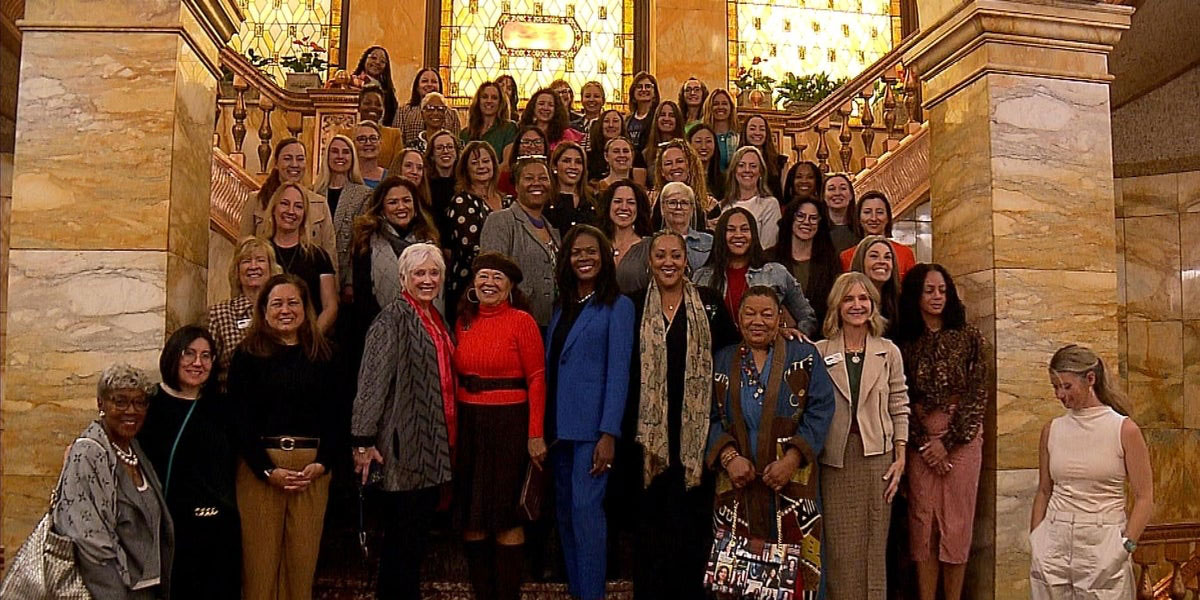
Monday marked 50 years since the signing of the Equal Credit Opportunity Act, and in Denver a series of groups met downtown to celebrate the anniversary.

The act made it illegal for banks to discriminate based on sex or marital status and was soon expanded to include race, religion, national origin, age and other groups. Part of the act allowed for women to take out a loan and get their own credit cards. 

The celebration took place Monday at the Equitable Building and included members of the Denver Chamber of Commerce, Colorado Women’s Education Foundation and the nonprofit Project I See You.

“We are coming together with all of us — organizations, businesses, individuals — to say yes it’s been 50 years of women in ownership, but we want to see that continue on for way beyond 50,” said Mercy Tucker, founder and executive director of Project I See You.

In 1978 the Equitable Building was the site of one of the country’s first women’s banks where women could open a bank account without a male co-signer.

[view original source article here]

Downtown Denver New Years Eve

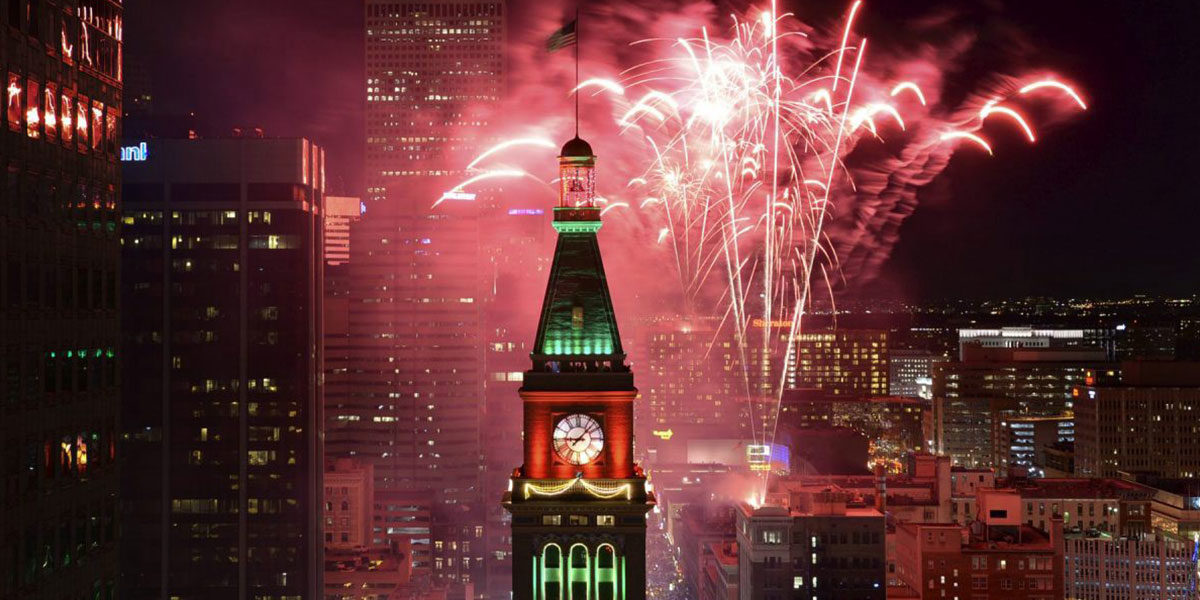
HUGE Fireworks Planned for Downtown Denver New Years Eve!

You better bet the New Year’s Eve celebrations in Downtown Denver Tuesday evening will be a blast!

This year, the fireworks shows along the 16th Street Mall are going to be different and much larger.

“It’s a lot more powerful!” said Jim Burnett, who’s producing the fireworks shows in Denver. “It’s kind of like scaring away the demons of 2019 and welcoming in 2020!”

According to Burnett, there will be thousands of different effects.

The New Year’s Eve fireworks shows are slated for 9pm and midnight.

click here for full article…


Doors Open Denver Comes To The Equitable Building.

Doors Open Denver (DOD) is a a special event celebrating Denver’s architectural gems, historic and contemporary alike.

One weekend every year DOD opens the doors to 60+ buildings, hand-selected by design experts. Thousands of residents and visitors traverse the Denver on self-guided and expert-led tours, engaging with the built environment in new and surprising ways.

Doors Open Denver 2019 is scheduled for September 21-22. Get more information via Denver Architecture Foundation.