
Denver Business Journal: 130-year-old downtown Denver building is making moves to modernize
By Catie Cheshire – Reporter, Denver Business Journal
The Equitable building in downtown Denver has been around since 1892 and the property managers of the historic building are on the quest to prove age is just a number.
Elevate Real Estate Services has managed the Equitable for the last eight years and plans to invest $5.5 million in the building to modernize the infrastructure while maintaining the historic character to bring The Equitable along on downtown Denver’s revitalization journey.
“The market downtown is hardly at its peak,” said Andrew Glaser, vice president of operations and partner at Elevate. “The Equitable has weathered a lot of storms over the last century and a quarter, from the silver boom to the oil crash, Ultimately, these renovations will help bring back a super high operating level at probably one of the most, if not the most, unique office building in downtown right now as downtown claws its way back up to being a more relevant market again.”
The first project at The Equitable is already complete: in September, the building switched from being part of Denver’s steam heating system to a natural gas heating method. According to Elevate, steam heating accounted for over 50% of the 730 17th St. building’s annual utility cost. Glaser said Steam costs for the building owners and tenants had increased drastically in the last decade in part because, as the building lost tenants due to the pandemic and other market factors, everyone had to chip in more.
“That was one of the main drivers and then just from an energy efficiency standpoint, or sustainability standpoint, the steam is coal-fired, so it’s not the most environmentally friendly,” Glaser said. “While a lot of people might say that natural gas is not as friendly as electric, it’s certainly more friendly than coal-fired. We feel like we’re finding a happy medium as most projects in historic preservation often do.”
The Equitable was designated as a Denver historic landmark in 1977 and added to the National Register of Historic Places the next year.
The building’s historic status meant the conversion to natural gas was a challenge. According to Glaser, the original idea was to put a boiler in the basement where the steam mechanical infrastructure currently exists. However, Denver code requires boilers to be in their own enclosed rooms, which wasn’t possible in The Equitable.
Additionally, running a gas flue vent along the side of the building would disrupt the exterior facade, on which Historic Denver has an easement preventing certain alterations.
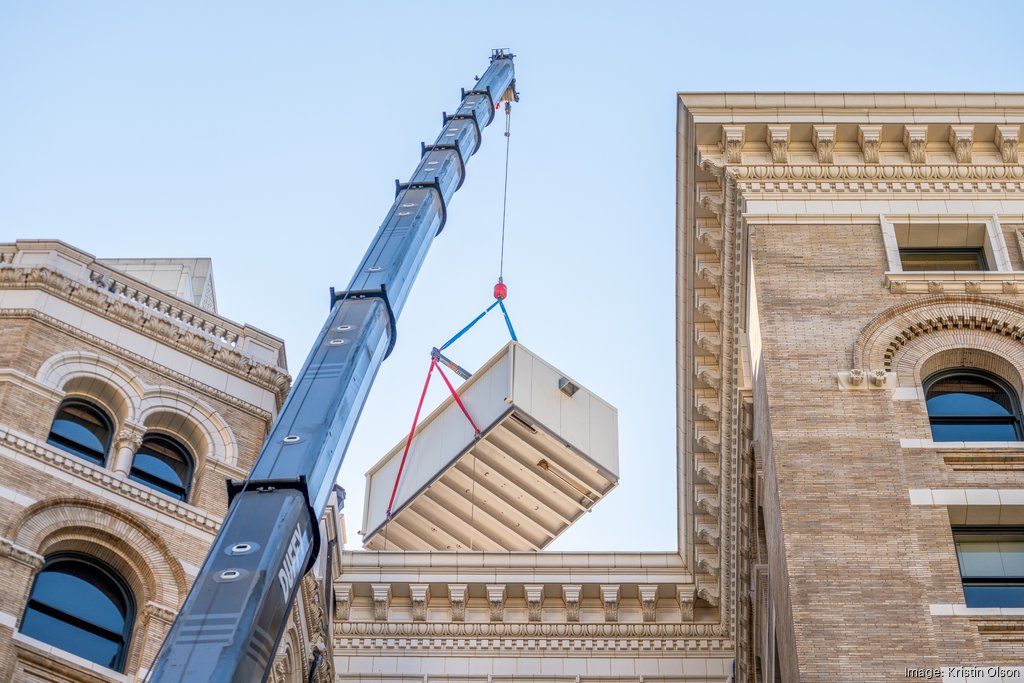
Glaser credits local engineering firm Braconier with the solution of entirely fabricating a boiler off-site, then placing that boiler on the roof using a crane.Rather than an exterior exhaust pipe, the pipe runs through the middle of the building. That method also allowed The Equitable to preserve the steam system to allow a few weeks of testing during the winter for the new gas system before dismantling the steam infrastructure.
Elevate liked the security of being able to know the new solution works before making a non-reversible change, Glaser said.
Historic Denver approved, too, and the 22,000-pound boiler now sits on the roof waiting for chilly days to begin. Next, Elevate will modernize the elevators, restore the facade and replace the fire alarm system.
Throughout the renovations, the Tiffany Glass and Italian marble and French Onyx lobby finishes will be maintained, as will other historic design elements.For example, the elevator has an illuminated light above each door, signaling whether the elevator is going up or down, which is a representation of theArt Deco style. During the elevator upgrades, Elevate plans to preserve the exterior style of the feature but install LED lighting behind it for better energy efficiency.
Glaser says finding innovative solutions for the historic property is rewarding because it shows landmark assets can stay relevant and thrive.
“In three months, we’re going to be done with both the steam to gas and the fire alarm project and we’ll literally have a state-of-the-art, high-efficiency boiler system and a state-of-the-art fire alarm control panel and fire alarm system, but you would never know,” Glaser said. “It’s just really nice to be able to provide the high-end infrastructure of a modern building and the history of the historic asset.”
Adaptive reuse and conversions of old buildings are a focus for downtown Denver right now, with the Denver Downtown Development Authority pledging $31.7 million toward two office-to-residential conversions of historic buildings in the area and other private developers investing in plans to retrofit older properties to give them new life.
Though the Equitable building remains an office, the upgrades are an example of how properties can maintain both their character and relevance.
Glaser said his top tips for others looking to revamp historic properties are to be deeply curious about the building, to leave no stone unturned on the quest for a solution, to be detail-oriented and to have excellent partners.
“It takes a lot of coordination with your vendor and getting them on board early on in the project to working a little bit harder than usual,” Glaser said. “Wearen’t just buying new for everything. Everything seems to be a halfway negotiation between modernization and preserving historic elements, so the partners go a really long way with that.”
In 2000, The Equitable converted to a condo system where individual owners purchase separate suites, charging Elevate with making building-wide investments for the collective. Along with The Equitable, Elevate manages around 55 buildings across metro Denver.
[View source: here]
